_

Showing posts with label art lessons. Show all posts

Tuesday, July 15, 2025

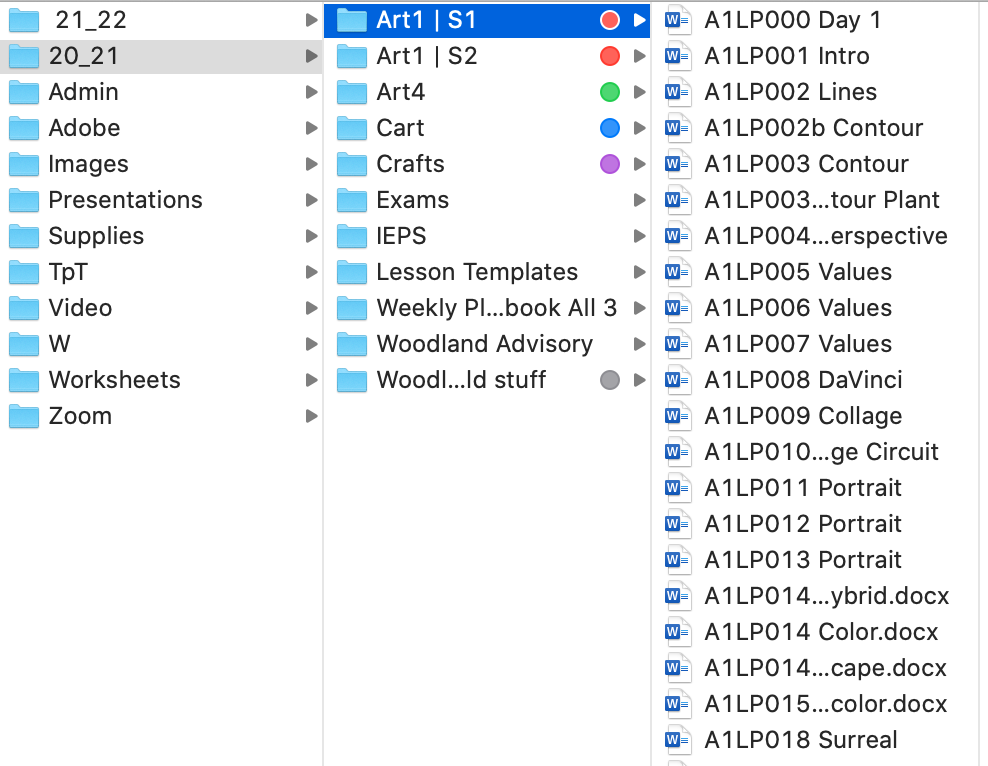
Art 1 Pacing Guide

 If you're a high school art teacher looking for help organizing your curriculum, this is my Art 1 pacing guide. It has a bulleted agenda of what I teach each day with visuals when possible. My school is on a 90 day semester block schedule. We meet 78 minutes per day - your mileage may vary.


This link will allow you to make a copy (for free) into your own google drive where you can edit it to fit your needs. Clicking the links within the document will take you to the individual listing on TpT if you want more details or images to help you visualize the lesson. Enjoy!

Sunday, June 1, 2025

Toy Story Gets A Glow Up

One of my favorite two point perspective lessons for my upper elementary students was inspired by the movie Toy Story. This year, I finally did not have any of my previous students who completed this lesson in a high school class and was able to move that lesson up to Art 1. 


If you've been following this account for awhile you already know  I've been mixing up my two point perspective lessons over the past 4-5 years trying to find something that resonated. We did perspective rooms, streets and houses. We've done them in pencil, watercolor and acrylic. Nothing was hitting the way that Toy Story lesson always seemed to with the younger kids, so I thought "why not?" The great news is that 14-18 year olds are still inspired by Toy Story. We are a 1:1 ipad school and my students are lucky enough to have the procreate app. 

The basic format of my perspective unit still remained the same. Starting with 1 point boxes, comparing 1 and 2 point perspective. Introducing angles like bird's eye and worm's eye. One of the fun ideas I added to this recycled lesson was showing short 3-5 minute clips from the movie and freezing the screen. This allowed students to identify the horizon line, vanishing points and angles.

I had a collection of toys in the room with a set up for them to photograph for reference and they were welcome to bring their own in as well. All students experienced a high level of success with this lesson and were eager to work on it. I find with paper pencil, students get so discouraged having to erase the lines over and over again, ruining their paper. This felt like the perfect time to go digital.

If you'd like to "just press play" on this video heavy resource you can find it here.

If you're an elementary teacher who'd like to see the original post use this link.


Sunday, May 18, 2025

Seasonal Grid Drawings

Semester 2 proved to be a little more challenging for the new square paper / no measure grid drawings. In the fall we used leaves, which were readily available for both students and myself. I brainstormed other items that might provide a similar range of challenge and came up with a few. If you're looking for more grid drawings, I have now added:

Food (lemons, peppers, red onions)


White Eggs (on neutral backgrounds, in cartons and on plastic easter grass)


Pool (Billiard) Balls 


Here is the fun set up in my home when I realized I could borrow the balls from a neighbor but did not have my own table. Thankful my daughter has sweatshirts in EVERY color

What objects have your students enjoyed drawing using the grid method?


Saturday, September 21, 2024

Teaching Abstract Art With Paul Klee

When it comes to introducing children to the world of abstract art, I find Paul Klee is one of the most captivating and approachable artists. His playful style lends itself to a variety of engaging art projects that are scalable for different age groups and abilities. Here are some of my top reasons to start with Klee when teaching abstract art

1. Imagination and Playfulness

Klee’s work is infused with a sense of play and imagination that resonates with children. His use of bold colors and shapes invites viewers to interpret the artwork in their own way, encouraging creativity and personal expression. When teaching kids about Klee, I like to emphasize the importance of imagination in art, prompting students to push their boundaries and create their own abstract pieces.


2. Accessible Techniques

Klee often employed simple shapes and lines in his compositions. This accessibility makes it easier for children to replicate his techniques in their own artwork. Whether it’s through drawing geometric shapes or experimenting with color mixing, kids can engage directly with Klee’s methods, fostering a sense of accomplishment and confidence in their artistic abilities.

3. Exploration of Color and Emotion

Klee was a master of color, using it not just to please the eye but to evoke emotion. He believed that colors could express feelings, which is a powerful concept for children to explore. Educators can guide students in understanding how different colors affect mood and perception, encouraging them to choose colors that resonate with their own feelings in their creations.


4. Cultural and Historical Context

Teaching about Paul Klee also opens the door to discussions about the historical context of art. As a part of the Bauhaus movement and influenced by various styles, Klee’s work can serve as a springboard for conversations about modern art, the evolution of artistic expression, and the connections between art and culture. This contextual understanding can enrich students’ appreciation of art beyond just aesthetics.

5. Diverse Subject Matter

Klee’s subjects ranged from playful to profound, often reflecting themes of nature, music, and childhood. His ability to blend reality with abstraction allows children to explore various topics, from storytelling through art to interpreting the world around them. This versatility can inspire students to create pieces that reflect their own experiences and interests.


6. Encouraging Individual Interpretation

One of the most exciting aspects of abstract art is its inherent ambiguity. Klee’s works invite multiple interpretations, teaching children that art doesn’t have to depict reality in a literal way. This can encourage critical thinking and discussion among students, as they learn to articulate their thoughts about what they see and how it makes them feel.


Friday, March 1, 2024

Women's History Month

I love to share the story "The Drum Dream Girl" with my classes in March for Women's History Month. This lesson is packed with interdisciplinary connections. Divide the drum into section. Apply patterns. Write a haiku to describe your drum.


Original post here.
Download the complete lesson plan with time lapse video demonstration here.

Wednesday, December 15, 2021

Creating a title panel for a comic strip

Many of my students in the cartooning class have outstanding technical skills, but consistently cut corners when it comes to lettering. To address this gap, I created a mini lesson extension where they need to focus more on lettering than the drawing or storytelling. 


We started by looking at the ways that different artists have created title blocks or title panels for their cartoons. If you save a month's worth of Sunday comics it becomes easy for them to sort them into categories. 

We noticed that some maintain a similar layout each week. Some provide a hint or sneak peek at the punchline while others are simply providing the basic information.


Students got a crash course in typography basics such as typeface, leading and kerning. While it might seem backwards to do the title last, it really helped them to have a solid grasp on their character and style first.

If you'd like to try this lesson, I have my plans here for download. If you already own the cartooning bundle, this was added to the set for free. Just go into your purchases and redownload the resource.


Tuesday, August 17, 2021

Scope and Sequence For Art Teachers at any level


It's no secret that I love all things organization, so it should be no surprise that I am a stickler for creating a scope and sequence (s&s) every year. 


Do I follow it religiously?  Absolutely not. I mean, I do and I don't. It's my true north. So when I see something shiny and new on an instagram story I go back to my s&s and ask myself "what can you get rid of?" and if the new lesson doesn't replace what the old lesson had then it goes into a folder called "ideas."


Next summer I pull out the old s&s and open my idea folder. Sometimes the shiny new lesson has lost its luster and sometimes it squeezes its way into the lineup, but if it does, it belongs there. It's not just a whim or a fad. I archive the old s&s in the cloud because sometimes you bump something out and then maybe realize that students aren't where you think they should be. Lots of times I go back and can see what I cut, or how swapping the order of what I taught made a difference. 


This is really handy when you are moving a specific skill up or down a grade level. When I decided to add gelli printing to my curriculum, I went back three years to look at how to best move things around so I wasn't skipping or duplicating anything.


While the best way to get the perfect sequence is to go through the process yourself, sometimes life just gets in the way. The scope and sequence for all of my classes are now free editable downloads from the preview on my TpT.

I'd love to hear how others work their way through curriculum changes.

Here's a link to get my s&s for each course that I teach.

High School Art 1 

High School Crafts 

High School Cartooning

Elementary Art

Middle School Art

Friday, July 2, 2021

Updated Lady Liberty Lesson


I just updated my copper repousse statue of liberty lesson to included a guided drawing page then realized I never published the liberty collage lesson that I did for several years. 


It's always fun to do at the end of the year to use up scraps of paper. I think this project started when inherited a room that had PILES of faded green paper.


For a fun twist you could also have students marble paper for the background for a fun cloudy sunset or you could try the firework painting technique that's all over pinterest.


Here's a link to the original post on the collage project and a link to the lesson plan. 
This is a link to the repousse post and a link to the lesson. The repousse (or copper tooling) is a great activity for summer camps.

I have the guided drawing sheet posted free on my Facebook Page. Go ahead and grab a copy for yourself.

Saturday, June 19, 2021

Summer Crafts For Campers of All Ages


Are you an art teacher who doubles as a camp counselor? If you’re running a summer art camp, here are some projects that your campers will love.

Fun crafts for elementary campers:

Koinobori – students can build and fly their own kits. Simple materials 


Shrinky Dink Pendants – design in camp. 4-6 at a time can be baked in a toaster oven – or send them home to bake as a family. You can use sharpie on take out containers for a recycled art lesson. Could use other designs as suncatchers.


Campers can work on this a little at a time while sitting in the shade. All you need is cardboard and string.


Rock painting

While they can paint whatever they like, sometimes a little added direction is nice. This mandala rock demo just blows me away. This can be done with campers of any age. Several years back I did fish with kindergarten, inspired by the book only one you.


Advanced options for middle school campers:

Gyotaku - If your campers have the opportunity to fish, consider letting your campers print their fish.


Tie Dye - This video demo of 6 different methods for creating amazing designs on t-shirts. For added fun, you could have campers create and use their own natural dyes.


Not included in that video is the quick and easy bleach method. You can use the same folds and patterns. Simply replace the colored dye with bleach. My teen daughter and I did this during quarantine and it's interesting to see how the bleach alters different colored shirts. Your campers could predict what will happen with bleach for a variety of colors.

Magazine bowls – A great way to promote recycling and/or upcycling with your campers


Coiled vessels - Campers can make small containers for holding tiny treasures


Monday, June 14, 2021

Teaching line and rainbow order together


I love teaching students about different types of lines using the book "Lines That Wiggle" and after a crazy remote year, it just made sense to offer this lesson with two video demos (one for each project). Original post here. 


Lesson plan with fully narrated video available here.


Saturday, June 5, 2021

Why I Use Reality Competition Shows in the Art Room

During my first go round at the high school level, students learned about color theory before winter break and we would use frosting and food coloring to create cakes in a color scheme. I would reference two popular competitive baking shows at the time (Ace of Cakes and Cake Boss) but we didn't watch them. I don't think I had the ability to save/record or project the shows or it just didn't occur to me.


With our last week of school coming up I was trying to think of something similar, but there are now restrictions on students eating food in my classroom, so we went another way. I decided to show my students the Netflix show Blown Away* and it was such a great decision.

For background, our admin cancelled final exams and are collecting the ipads from our seniors which doesn't leave me with a lot of options. This is my Art 4 class and 80% of the kids are at home this year.  I can't really assign new work since grades are due before the last day. So most days I'm sitting in the room with a small handful of kids. This week it ended up being one girl. One. Also known as super awkward art class. So I thought I'd introduce the show a day early to test it out, and avoid the awkward situation of us in the room for 80 minutes.

As we watched the show together it became abundantly clear that I NEED to show something like this to ALL of my students before the first critique of the year. There is so much modeling of the studio habits and art criticism that was so much more meaningful than me explaining it to them on a worksheet. Let's break it down:

1. Prompts: Each of these shows regardless of end product give a prompt of some sort (design a birdhouse, create a vessel) that is open for interpretation

2. Limitations: The judges on the show always introduce a restrictions of time, media, size or color palette 

3. Rubric: Prior to saying "Go!" the judges reveal the categories upon which they will be judged.

4. Planning: The shows often include brief interview with the artist where they outline their plan and or materials and explain their rationale for the direction they have chosen. This time may also include a biography in which students can hear about a wide range of career pathways and programs of study. 

5. Formative Assessment: The judges circulate throughout the competition asking the artists clarifying questions or reminding the contestants of the limitation or criteria.

6. Trial and Error: We see the artists push the boundaries and fail. They regroup and try again.

7. Reflection: Prior to the judging portion of the show, there is often a second interview with the artist where they self-reflect on the process and how they did, what they would do different, what they are proud of and what they learned.

8. Critique: Some shows have judges meet privately while viewing the work, some review the work in front of the artist, some ask the artist to present and defend the work (Hello, artist statement).

9. Feedback: At the end of the episode, the judges reveal the winner (or loser) and explain why the person who is going home was eliminated.

I'm pretty sure the lesson plan just wrote itself. And now, when I watch season 3 of Making It this summer, I can tell myself I'm "lesson planning"

* This is not a sponsored post. I used my personal Netflix account to share in class. There is mild profanity in this specific show that is not censored out when the contestants glass pieces are broken. Make sure that is allowed in your setting.


Wednesday, May 5, 2021

Everyday Matters High School Art Assignment


My students are currently wrapping up a project inspired by Danny Gregory's book and drawing group "Everyday Matters." This is very near and dear to my heart. During my maternity leave, I stumbled on this group and an amazing support system of sketchbook artists. 


In keeping with the limitation theme for my sketchbook assignments, students had to select one of the weekly Everyday Matters Challenges from the list. This became preparation for their project, where they would focus on elevating an everyday item or routine.