_

Showing posts with label middle school. Show all posts

Saturday, April 13, 2024

Earth Day Resources for Art Teachers

In the colorful world of art education, every stroke of paint and every sculpted form carries not just the weight of artistic expression, but also a commitment to environmental stewardship. While Earth Day may serve as a poignant reminder of our collective responsibility to protect the planet, art teachers embody earth consciousness every single day, weaving sustainability into the fabric of their classrooms.


In this post, several of my favorite art teachers share their best practices and classroom-tested lessons as we we explore the benefits of recycling in the art room. From repurposing materials and fostering creativity to instilling a sense of environmental responsibility in their students, these educators exemplify a dedication to preserving the Earth that extends far beyond a once-a-year celebration.

COST-EFFECTIVE SOLUTIONS

Art supplies can be expensive, especially for schools with limited budgets. Recycling offers a cost-effective alternative by utilizing materials that are readily available at little to no cost. From cardboard and newspaper to plastic bottles and bottle caps, the possibilities are endless. By creatively repurposing these materials, educators can stretch their budgets further and ensure that all students have access to the materials they need to unleash their artistic potential. Amie from Glitter Meets Glue is ready to share how she incorporates this in her classroom.

"My absolute favorite way to get the best bang for your buck in the art room is to implement a yearlong artist trading cards project. They’re miniature art projects the size of a playing card. And they cost nothing to create!
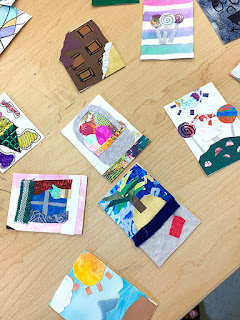
After every art project, collect the “good scraps,” as I call them, in a garbage bag. Think: leftover painted papers, bits of construction paper, gift wrapping paper, feathers, beads, felt, fabric, etc. Basically, any project remnants you considered tossing or don’t have enough to use for even one class, toss in the bag. 

After I’ve collected a big bag of random materials, I fill large bowls with the scraps for students to create artist trading cards. They cut, glue, color, and paint unique artworks that they can trade later on in the year with friends. On the last day of school, I do an all-day ATC exchange. The kids love it and it’s always such a huge hit at a very chaotic time of the year!"

If you’re interested in getting started on artist trading cards, check out her complete teacher guide, lesson plan, worksheets, and PowerPoint slides. She'll walk you through the entire process.

RESOURCEFULNESS AND CREATIVITY

Limitations often fuel creativity, and recycling presents the perfect opportunity for students to think outside the box. By repurposing materials that would otherwise end up in landfills, students are challenged to find new uses and innovative ways to incorporate them into their artwork. This encourages resourcefulness and cultivates a mindset of creative problem-solving—a valuable skill both inside and outside the art classroom. Whitney from Look Between the Lines has some impressive 3D inspiration for us:

"My favorite Earth Day project is my found object assemblage project. This is a great way to bring sculpture into other art classes or focus on a found object-style sculpture in your sculpture classes. This can be introduced on Earth Day, with a focus on what materials can be reused and turned into a work of art. My favorite found object artists are Tara Donovan and John Dahlsen, I use them as artist exemplars to inspire my students before they start their project. Students are responsible for collecting their materials. While waiting for materials to come in they prep wood panels, where they attach their materials, brainstorm and research ideas, and sketch out designs. Experimentation and thinking ahead are key to creating a successful work of art. I also recommend having an in-progress and final critique with students as they work on their assemblages. 


This project can be taught to students as young as 5th grade, I recommend working on one piece as a class project. For middle schoolers, I encourage small groups of students to work together. In high school, students can pair up or work individually."

Read more detailed information about Whitney's Earth Day assemblage project here or hit the easy button and get the lesson pack with everything you need to teach the project (minus the supplies) here. 


EMPOWERING STUDENTS THROUGH OWNERSHIP

"Embracing recycled materials as art supplies in an elementary classroom is not only cost-effective but also instills a sense of environmental responsibility in young students. Sorting bins for various reusable items such as cardboard, scrap fabric, colored paper, string, and containers transforms waste into a treasure trove of creative potential. This approach encourages children to see the value in everyday items, fostering a culture of sustainability and innovation. For instance, cardboard pieces can become the canvas for a collage, string and fabric scraps can be woven into a textured tapestry, and old containers can be transformed into whimsical sculptures. Such activities nurture creativity, as students learn to work with what's available, adapting their artistic visions to the materials at hand. This method is particularly beneficial for schools with limited budgets, offering endless possibilities for artistic expression.
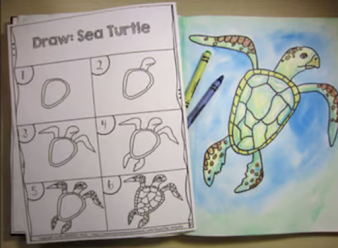
Directed drawing activities, like the Earth Day Themed Directed Drawings, provide a structured yet flexible framework for art projects. These guided exercises can be adapted to whatever materials are on hand, allowing students to choose from a variety of mediums or work with specific ones based on current supplies. This not only enhances their drawing skills but also teaches them to be resourceful and imaginative, key qualities in both art and life. "

If this sounds like the perfect activity for you, visit her website to plan quickly and teach confidently.

BUILDING CONNECTIONS

Recycling in the art classroom provides an opportunity to forge connections with the broader community. Partnering with local businesses, recycling centers, and environmental organizations can enrich students' learning experiences and expand their understanding of sustainability initiatives in their community. Many times art teachers are the recipients of large scale donations of random materials from community partners. Next, Sabrina from A Space to Create Art shares an example of how to use donated boxes or containers to creating meaningful artworks.

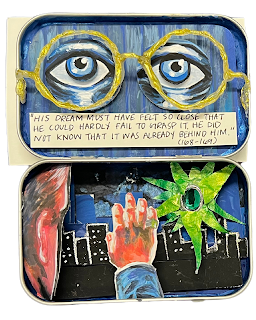
"In this assemblage piece, high school and middle school art students learn about artist Joseph Cornell and create a mixed-media sculpture inside a mint tin. Their art is based on a famous novel’s quote or theme. By marrying visual art and literature, they delve into the nuances of storytelling, exploring themes, characters, and settings in a tangible and tactile form.

Joseph Cornell was known for his pioneering work in assemblage art. Cornell's distinctive style transformed found objects into captivating compositions housed in shadow boxes and glass-fronted cases. His pieces often evoked a sense of nostalgia and wonder, blending elements of surrealism and collage to create dreamlike worlds.

As students breathe life into their sculptures, they embark on a personal and introspective journey. Each sculpture becomes a testament to the power of imagination and the transformative nature of art. Below is an example created by a student based on the novel The Great Gatsby by F. Scott Fitzgerald."
You can find this lesson ready to teach at A Space to Create Art on TpT or on her website: www.aspacetocreateart.com

FOSTERING ENVIRONMENTAL CONSCIOUSNESS

Exposure to Earth-friendly art-making approaches can encourage our young artists to think in a globally conscious, macro beneficial way. By being environmentally-thrifty and eco-aware in our art teaching, we potentially seed future creative solutions in our artists, while providing them with some ‘food for thought’ regarding their own use of the earth’s limited resources.”


In her blog post here, Stephanie shares a few practical tips for earth-friendly (and budget- conscious!) art materials, equipment and supplies. Check out her TPT store here here.

CONCLUSION

Integrating recycled materials and sustainable practices into your art room offers a multitude of benefits that extend far beyond the school day. Changing a few habits or lessons each year can have a monumental impact over the course of your career.  Need help getting started? My previous post on Earth Day lessons has several project ideas you can incorporate easily.  By embracing recycling as an important part of the artistic process, educators have the power to inspire future generations to create positive change—one masterpiece at a time.


ART TEACHER-AUTHORS THAT CONTRIBUTED TO THIS ARTICLE:

Stephanie from Picassa’s Palette
Amie from Glitter Meets Glue
Whitney from Look Between the Lines
Kathleen from Ms. Artastic

Friday, March 12, 2021

Printmaking Projects For Every Age

You can't deny the magic of printmaking.

I've taught K-12 and there isn't a grade that doesn't love printing. After a quick survey, my Art 4 students had no memory of doing printing of any kind, and since more than half of my class is remote this year, I made a video that covers a full range of techniques. We are workshopping our way through them all, and they will pick their favorite for their assignment. 


K-1

Your youngest students are more than capable of collagraphs and simple rubbings. Students with poor motor skills may need to start with texture plates and peeled crayons prior to staring collagraphs.

Stamping is also an excelled option for this age group. Advanced students may be able to use cookie cutters to create simple styrofoam plates for rubbings.


2-4

Advanced stamping or stamping as mixed media will be a delightful option for these students.

Elementary students who have mastered the basics of printmaking are able to create marker prints and some basic monoprinting methods. They can be very successful with foam printing plates, carved with a dull pencil.


5-8

Middle School students are able to carve simple plates and stamps. Some students can be trusted to carve linoleum blocks at this age. Substituting with an eraser is a popular choice for many middle school art teachers.

Middle Schoolers are able to complete more advanced monoprinting techniques and may ready to safely handle fragile gelli plates . Marker prints with more detail are still appropriate and enjoyed at this age.

9-12

High school students who have been previously exposed to a range of printmaking processes may be able to handle serigraphy, rust printing and reduction prints requiring advanced registration.


What are your favorite printmaking projects and what age group do you teach? If you're looking for printmaking clip art like the images used in this post for your own illustrated directions or word wall, you can find some here.


Monday, February 1, 2021

Celebrating Black History Month in Your Art Class

Many of us have been seeking to diversify our curriculums. Last summer I shared a list of black artists that my students enjoy learning about. Although I prefer to introduce students to artists as it makes sense in my curriculum, this seemed like a great time to share a few favorite art lessons inspired by artists of color. 

Here are some of my favorite books (with read alouds)

Art from her heart - Kathy Whitehead
Getting to know the World's Greatest Artists: Jacob Lawrence - Mike Venezia
Getting to know the World's Greatest Artists: Faith Ringgold - Mike Venezia
Say Something - Peter Reynolds (read by the author)
Be Who You Are - Todd Parr (read by the author)
I am brown - Ashok Banker

Here are some of my favorite websites for inspiration:
Learning For Justice (Formerly Teaching Tolerance)
Teach For Justice (Free Webinar Series)


Elementary


Secondary


Applied Art / Crafts 


Tiff Massey


What are some of your favorite lessons, books or resources?

Sunday, January 3, 2021

Tips to Ease Back To School After Winter Break

Well, that went fast! With the absence of many of our normal family and friend gatherings, this break was very different. Maybe you set some goals for the coming year that are tied to self care and organization. Perhaps you've received a last minute notice that your instructional model has changed (yes, again!). I've been busy updating many of my resources to include remote learning strategies, videos and editable files and will continue to do so this year. I've bundled items that create entire courses and included helpful editable documents such as syllabus, scope and sequence and final exams when possible. Here are a few items that may help you transition back into teacher mode:


Up first is my Free Art teacher's guide to organization. It's over a dozen pages of practical tips and strategies to streamline your class routines and preparation. It's been edited and revised dozens of times since first published about 7 years ago.


Distance learning clip art  to reflect our current spaces. I also have kids with masks.


High School Cartooning Course (Bundled Set)

- Could be used as stand alone units within a larger course. 


High School Crafts Course (Bundled Set)

- Could be used as stand alone lessons in your 3D, sculpture and applied art courses


Elementary Art Choice Board Bundled Set

- Could be used as options for choice focused classrooms, early finisher stations or sub plans. 


2021 Art Teacher Planner. 

New Year, New Start. Undated pages with a 2021 calendar included.


Google Classroom Organizational Headers in four different styles


Editable Syllabus

Easily organize and present an overview of your course to students 


Syllabus Meme Icebreaker

Turn reading your syllabus into a first day ice-breaker activity


Digital Interactive Notebook

Use google slides to create an engaging notebook. All the formatting and linking is done for you. Three styles (horizontal and vertical...with tabs)


Thank you for stopping by. Please share what you're doing to stay organized and sane in 2021.


Thursday, November 19, 2020

Animation for all ages


There is something about an animation lesson that just hooks kids every time. Thanks to GIFS, tik-tok and boomerangs our students are already well versed on moving pictures. While it was never expressly part of my curriculum, I always tried to sneak a little bit of animation in when I could.


K-2 students absolutely can master some of the basic animation devices like roll ups and thaumatropes. For the littles, I prefer a circle or square on a stick or straw to string, but I usually show them both and let them choose. Two years ago I did an animation station at my elementary STEAM night and the kids (and parents) had so much fun making both of these items. I've also used them as part of my art center and free choice day.


3-5 students love jumping into more complex ideas and if you have access to technology, this might be a great time to work in a little stop motion. A few years back I wrote a grant to get enough white boards and modeling clay for a grade level of 3rd graders. They worked in teams to create animated shorts. They did their titles with dry erase, and their videos were claymations using the stop motion studio app. A few adventurous kids, brought the videos into iMovie and added sound. Original behind the scenes post here.


Middle schoolers will love any of the above PLUS they might have the patience to do an old school zoetrope, phenakistoscope or flip book. My fifth graders were able to do some basic animations in procreate last year. This year, I dedicated a healthy portion of my budget to purchase a procreate license for each of my cartooning students. Using the animation assist feature, they are starting to animate characters they designed. 


We started by examining anthropomorphism and they are working to bring to life an inanimate object. Their first mini assignment was a single action sequence. A wave, a hop, a blink. It's really important for them to separate a single action from a broader term (like "dancing") as many kids will be ready to go with a whole plotline. This student's "nervous" candy is really sweating it out on halloween.


From there, we did a basic squash and stretch activity in procreate with basic shapes. This is how they learned to identify their keys (extremes). We used animation assist to speed up the drawing process.


They are now sketching out a more advanced movement sequence. It's so much fun to watch their ideas come to life. How about frame 5 on this adorable origami boat. I love how he's peeking to check that the coast is clear.

With strong connections to science, writing and math I can guarantee your principal will never complain about you teaching animation in art! If you'd like some help with lesson plans for these ideas you can click the links above for the original posts or you can view my lesson plans:

Historical Animation devices

Animation with Procreate

Stop Motion Lessons


Wednesday, August 12, 2020

Digital Interactive Notebooks for Art Teachers

I'm still waiting (like everyone else) to find out exactly what the expectations are for the fall. At the current moment, we will be in a hybrid/blended instruction model. In theory that means half of the alphabet comes on Mon & Tues with a deep clean on Wed and the other half of kids on Thurs and Fri.


Normally I would have all of my photocopying for the year sent out for duplicating by now, but this year I decided to try digital interactive notebooks for my students.


I like the idea of a giant notebook that grows with the student throughout the year the same way a real notebook would fill with pages. So I started with that idea.


Then I thought a little more about the structure of my class and how I normally parcel out a little bit at a time as it relates to a specific project. Thinking this way, I tried a unit/project based notebook. I'm leaning toward this option as I think it will be more flexible. I've been watching youtube videos and I don't know that all of my students will be able to handle adding pages in....not to mention the giant overall size of the final notebook.


How are you setting up your blended learning classroom?

Sunday, November 10, 2019

Painting a patronus

Are your middle school students obsessed with Harry Potter? Connecting to pop culture is always one of the easiest ways to get students engaged. Such a fun way to slip some color theory into your curriculum. Depending on your students you could do straight monochromatic, or if they are a little advanced you could lean into analogous color schemes.


While canvas and acylic are shown here, I imagine these could be quite beautiful with chalk pastels as well. Interested in the lesson plan and presentation? Check it out here.

Tuesday, March 5, 2019

Scherenschnitte


A few years ago we took a trip to Colonial Williamsburg and I had the opportunity to take a scherenschnitte workshop. While I had usually taught paper cutting through Mexican Papel Picado, it was hard to ignore the natural tie ins to Pennsylvania Dutch culture for this PA art teacher. You can read about the workshop in the original post here.


Fourth and fifth grade have had great success with this project and it's now available with the powerpoint I share with my own students.


We started with a powerpoint of some amazing contemporary artists like kiri ken for inspiration.
How do you teach paper cutting with your students?


Monday, February 25, 2019

Mixed Media Inspirational Quotes

The first section of 5th grade is starting to wrap up their illustrated quote project. Looking forward to more inspiring messages. These will look awesome on display for leadership day.


This lesson was inspired by the work of artist Pat Byrne. 
If you want to teach this and skip the prep, quickly download it here.

Wednesday, February 20, 2019

77 pages and growing

Just uploaded the latest collection of art worksheets. This collection is now a 77 page resource for K-5 Art Teachers. I have found them to be a great way to collect data for my SLO or to formally assess students. Got an early finishers situation? Unlike a coloring sheet this will reinforce your curriculum.

I assemble the pages that I might use with each grade level into "FunBooks" and send them out for copying over the summer. This way I'm not standing in line at the (usually broken) copier each morning. Enjoy!


Friday, February 8, 2019

Illustrated quotations

On a trip to Ireland we picked up these two pieces of art by Pat Byrne at the Jam Art Factory.


I'd been kicking around the idea of using my childhood dictionary for years and finally turned the inspiration into this lesson for 5th grade.


Students had two weeks notice to select their own quote or choose from a list provided. In progress photos coming soon. They've been working on their mixed media all week and will begin adding their quotes next time. I can't wait to share; they look amazing so far. If you're excited to try something new in your classroom, my lesson plan includes the powerpoint and video that were so helpful to my classes. Enjoy!


Sunday, January 13, 2019

Tessellations

My 5th graders did a great job this year with tessellations. I highly recommend the "Introduction to Tessellation" book by Jill Britton and Dale Seymour. It provided a nice framework for my students.


If you'd like to try tessellations with your class, check out my lesson plan. It's a free download on TpT right now.