_

Showing posts with label art room. Show all posts

Saturday, August 17, 2024

Open House Ideas for the Art Teacher

Open house is a great time to make or solidify connections with your school community. If you're in a school that doesn't have a formal program or tour you may be wondering what to do in your room. Here are my top 6 ideas to maximize this event for you.

1. WISH LIST

Classroom teachers are not shy about putting together lists of everything they need for their students to be successful in their room. You don't need to be shy either. Maybe you truly love dumpster diving, but if not, I suggest hanging up a tear-tab style poster on your bulletin board or door. 


2. ARTSONIA/FUNDRAISER SIGN UP 

If you participate in Artsonia you are going to need parent permission for any new students. If you aren't using artsonia this post walks you through the many benefits I have found using this program in my school and how to get started. 

If you participate in any of the single project fundraisers or "art show" style fundraisers you will probably want to seek the help of your PTA or individual parents. Open house is a great time to capture their attention and enthusiasm. So grab a clipboard and start a volunteer sign up sheet. 


It's also great to have your artsonia site up on the projector with looping slides of student work. Another great place to do this is in your auditorium or gymnasium. It reinforces the value of art, and is a great reminder for parents who may not have signed up in previous years.

3. ART GALLERY APPLICATIONS

Parents of even the youngest students are often looking for opportunities for their children to engage in activities beyond the school day. One of the best things I did for my school was to start a student-led art gallery. Students met a few times beyond the school day (conveniently times when I already had to be in the building but was not actively participating in meetings) to help with mounting artwork, hanging displays in the hallway, photographing art for our online art gallery and leading tours as docents for the art show. Have plenty of applications on hand for this event while parents and students are in your room increases the chances of filling those positions. This resource contains all the forms needed to start your own.

Not sure you're ready for an art gallery? You could also have a sign up sheet for parent volunteers to cut paper, mount artworks on paper or hang displays in the hallway.

4. COMMUNAL COLORING

Our open house takes place the week before school starts. So my hallways are typically empty. I like to roll out some bulletin board paper and invite students to color (a little or a lot) while their parents are completing some of the above mentioned activities. You can write an inspiring quote, or outline some art supplies, whatever would go over well with your populations. Now you have art ready to hang up for the first day of school until students finish some projects to hang in the hallways. The bonus? Since these don't belong to any one student, roll them up and now you have decor ready to go for NEXT YEAR'S open house. 


Another option would be ready to go coloring pages of single objects like art supplies that students can color and then staple to the bulletin board. You could have prepared bunting pieces that spell out your school name, or welcome back.


5. BUILD YOUR SOCIAL MEDIA PLATFORM

If you want parents to like, follow, subscribe to your art blog, instagram, etc this is the time to grab their attention. I set up a "selfie-station" and asked parents to post their favorite picture from the night and to tag the art social media account. Then make sure to like each post and you will find most parents follow you back. This is the place where you announce your art shows, art contests, request for donations and more. But it all starts by building your audience.


6. HANDOUTS
I firmly believe in teaching parents how to have productive conversations with their kids about art. This handout is a great way for parents to open the line of communication. I try to model these questions in front of parents as students are participating in free draw or coloring in the banners.


If you have a formal program or must present to groups of parents, I would suggest this drag / drop  Meet the teacher format. 


Sunday, July 31, 2022

High School Organization Ideas for New Art Teachers

** UPDATE** ALL of these (and more) can now be found in a FREE 15 page download.

This is a post to easily share my answer to some of the common questions that pop up each fall in my high school facebook groups.

Q. How do you store student artwork?
A. Flat, dry work in progress goes inside their personal folder, stored on a drying rack. 
     
Flat, wet work goes on top of their folder on the drying rack. I number the shelves (they get a number for everything. Their folder goes on their shelf number.


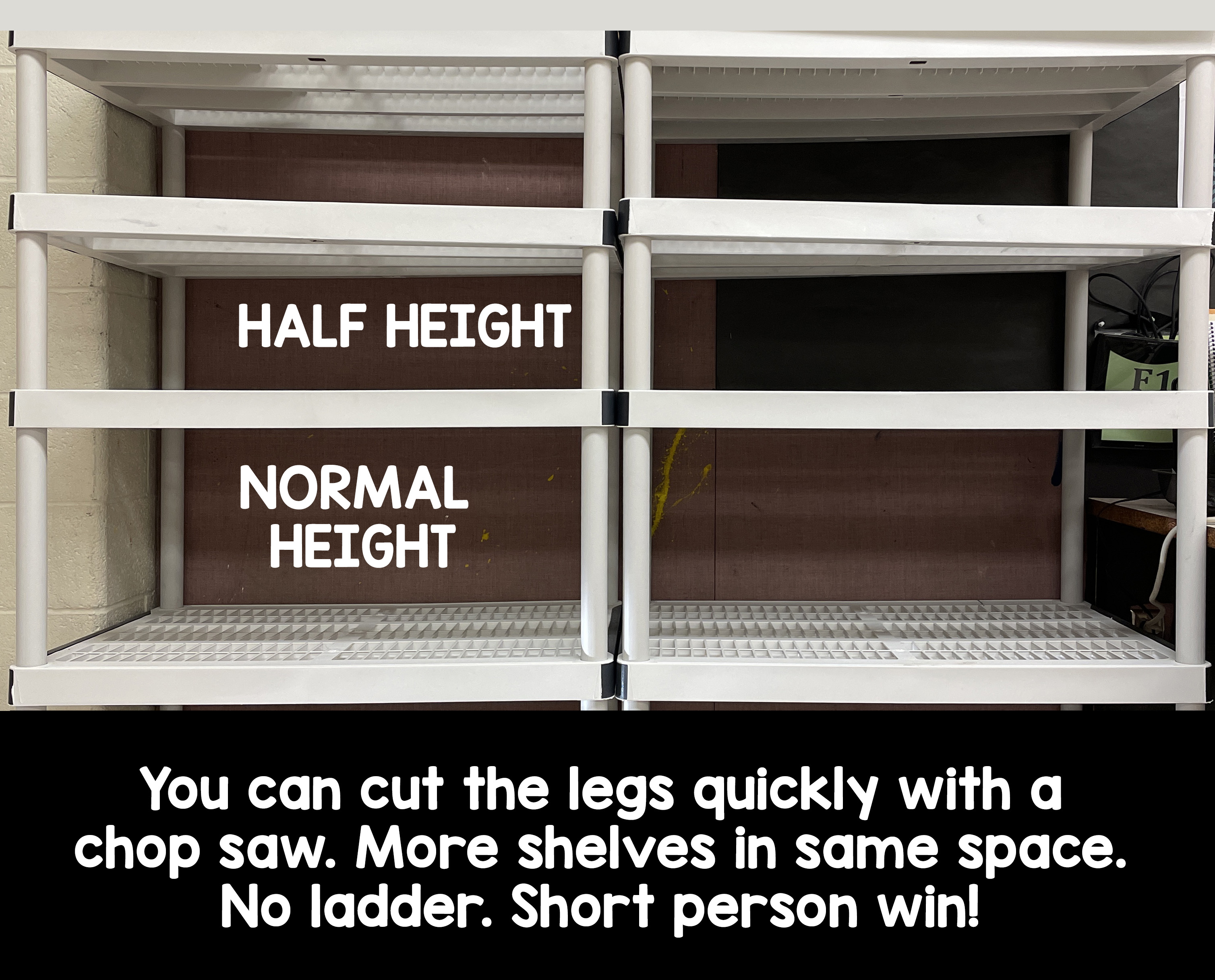
3D work goes on the shelf labeled for their class. I cut down the legs of the snap together plastic shelving so I can fit more shelves and still reach the top.


Q. How do you have students submit work?
A. Students photograph their work. I use this powerpoint to teach them how to upload quality pix. They turn in the photos using our LMS (Schoology for me). They put the actual project into the grading box on a labeled shelf. If I can't see the work well enough in the picture, I can go to the box to find their work. Usually the picture is enough to jog my memory of what I have seen and been observing in class. It's a visual reminder.


Q. Do you assign seats for High School?
A. Yes and no. For all level 1 classes, they have assigned seats for the first 2-3 weeks to help me quickly learn their names. Around that point we start working on observational (still life) drawing, so then they choose their seat so they get the view they want to draw.


Q. How do you grade High School Art?
A. Project rubric for all studio projects. And by this I mean an articulated rubric. I am not a fan of printing a giant sheet of paper when you are just changing the word inside the block from "Outstanding" to fair. Sorry. If I'm going through the trouble, then each block is going to specifically say what is different. 


Q. Do you do bell ringers or warm ups?
A. Yes. We are on 78 minute blocks now, but I also did them when I had 41 minute periods. I believe students need that transition time. This post explains how it's a great way to slip in more art history.


Q. Do you decorate your room or have a theme?
A. I post the elements and principles of art (mini posters) on my cabinet doors. I have a set of beautiful posters that were free from amplifier.org that I hang behind my desk. It was a giant mauve bulletin board, and I used black butcher paper to cover the horrendous color first.


I'm a fan of "less is more" so I do not have borders, or crazy printed wallpaper or 1,000 paint chip samples glued to my desk. If that's your jam, go for it! I also don't have student painted ceiling tiles or murals because I have inherited rooms with them in the past and it makes the room feel small and chaotic. I would highly encourage new teachers to have kids do this on a canvas or butcher paper, especially if your district moves people or rooms frequently. 


Q. Table bins or individual supplies?
A. For hard goods: scissors, rulers, etc I have bins on my counters and they self serve, 
     
For painting, I have 20 sets of brushes in a cardboard "packet" that is shared between classes. So when student #1 is done, they put it in the #1 spot. When my 2nd class comes in, if student #1 has messy brushes they tell me and I discuss with that student the next day and they have to show me their paint set before they leave each day.  I've also used the over the door shoe pocket holders for this purpose.


Every student gets a personal art kit that they should have one them every day. We started this during the pandemic and it has been a time saver. Once our drop/add period is over, each student gets a gallon sized ziplock bag with 2H, 2B & 5B pencil, one eraser, one pencil sharpener, one black sharpie, one cheap stylus (for digital work) and a glue stick. The last two years I gave a watercolor set, brush, about 10 feet of plaster craft in a brown paper bag stapled shut. I told them to take these items home in case they got quarantined or the school was closed. See how I made cheap watercolor kits for each student.


Q. How do you group / organize supplies
A. I am lucky enough to have about 160 of these sliding bins. Don't be too jealous, I do not have a proper closet. My room is like a math room with a sink. Also not everything conveniently fits in something 3" high. But I work with what I have. Because there are so many, I keep my supplies in alphabetical order. It helps me remember where they are or if I need to direct a kid to get them, I can more easily explain where they are.


If we are using colored pencil, I will pull those bins out and place on the counter / window sill until that project is over. I keep them sorted by color and used scraps of cardboard to help subdivide the bins (but you could totally buy mini bins at the dollar store.


Utensil organizers are also good for separating colors or types of paint brushes.


What other organization questions do you have?


Monday, June 6, 2022

End of Year Checklist

 There are a few things you can do during the last week of school that will make future you super thankful.


1. Test & Toss

With student assistance or on your own check markers. Snap those caps. That goes for glue sticks as well. I also like to consolidate supplies. If I find that I somehow have two open bottles of red paint I try to get them into one.  This is also the time to check your "First in First Out" organization. I write the date on my paint bottles and other expensive supplies. Throughout the year, stock doesn't always get rotated properly, so it's a good time to get things back in order.

2. Take Inventory and submit your supply order for next year

If you normally revamp your curriculum over the summer, save a portion of your budget. I usually spend about three quarters of my budget before I walk out the door, because there are some staples that you just have to have. This year I had a ton of things on backorder due to supply chain issues and it made for a bit of shuffling around. Do yourself a favor and get the order placed now.  If your district window is closed you can add items to your shopping cart or list while it's fresh in your mind.


3. Clean out your desk

Take home any food or medicine that you may keep on hand before it expires or is found by critters. I like to wipe down the surfaces and reorganize the space inside using cheap drawer dividers. Even though it feels like I am always putting things away, somehow I manage to find a dozen random sharpies sprinkled around in all the drawers. 


4. File everything using a system.


Fight the urge to stuff things in a drawer. Use a manilla folder, envelope or binder to keep records separated by semester or year for easy reference if needed. It's a great time to go through your old records and toss items that are no longer needed. Check with your admin on how long teachers should hang onto gradebooks, etc.


An often overlooked system is our virtual drives. While your district may archive student or course info, have you taken a moment to tidy up your google drive? I find it helpful to create a new empty folder every year for lesson plans. If I plan to reuse a lesson I can drag it over. Otherwise I can open last year's file and make necessary edits and save as into the new folder. I like this method, because if the new lesson doesn't go as planned, I still have a record of the old plan.


5. Map it out

I have found that posting a map of my preferred room layout is greatly appreciated by custodians.  Sometimes there are seasonal helpers moving big pieces out for floor waxing (not your normal every day custodian) and when it comes time to move back in, they may just set things up in a way that makes sense to them. I staple a copy to my front bulletin board so it doesn't get lost.


6. First week Photocopies


Do you have a limited number of copies per year, quarter or month? If so, why not get a jump on next year's copies by knocking out some of the items you may use the first week. This might include a course syllabus or behavior contract, a "Meet the Teacher" paper for open house and your favorite worksheets or handouts. This will also save you time waiting in line during the busiest time of the year when everyone else is making copies. 


7. Design your Wish List or Donor's Choose items

You can really stretch your budget when you allow others to help. I've funded an artist in residence, a class set of apple pencils through Donor's Choose. On a smaller scale, you can also get all the cleaning wipes, egg cartons or tissues you need if you give your PTA a head's up about what you need. You could send your list home with their portfolios at the end of the year, or post this "tear a tab" flyer in the hall during Meet the teacher night.


Saturday, August 21, 2021

Top 5 things to do the first day back in your room

Was this the shortest summer ever? Yes. Yes it was. 


T


This year we have been unable to get back into our rooms as early as I would normally like so I have a laser focus on what I need to get done the first day back in my room. We normally have 3 days of inservice and was just informed that I won't be in my building at all on day 1. If you've been procrastinating, this list might be helpful for you. Because I have limited time in my room, I'm omitting anything I can do at or from home. This is my bare bones checklist of what I need to be ready for the 1st day.


1. Set up your desk.
For me that's a clear deskmat with my essentials on it. So even if I'm out sick on the first day, there is something for a sub to look at. Schedule, where to find important info, who to ask for help. Done. 
We are unable to leave our desk set up over summer, so I need to put my basic tool carousel on my desk. I can't fully function until my desk is in working order.


2. Unpack your supply order.
Grab that packing slip and a highlighter and open up those boxes like a 3 year old at a birthday party.


3. Create student storage.
As a high school teacher, I need to label the shelves for each class I'm teaching and make a folder for work in progress. I also have a basket of pencils (sharpened) out that students can borrow on day 1. I don't know if they are going to be allowed to share this year, and I likely won't find out until our first day of inservice, but I know pencils are universal.


4. Test your tech.
Does my printer work? Does my LCD work? Does my doc cam work? Do I need extension cords? I know I can work on my first day presentation from home. As long as everything will sync I'm good to go.


5. Sign out system
No matter what happens on day 1, kids will ask to use the bathroom or see the nurse. So paper pass, QR code to scan out. Whatever your system, get ready.


I know this may seem like a very limited list. It is. But if I get this done, I know that I can handle the first day back. I can create things from home. I'm not making photocopies for anything. I can review class lists and IEP's online.  I can type lesson plans from home. Day one in my room is tackling anything I can't physically do at home. 

What is on your first day checklist?

Wednesday, August 11, 2021

Learning Student Names

As an elementary or middle school art teacher, we are often tasked with remembering the names of 600-900 kids at a time. Not an easy task. Add to the amount of times you may switch buildings and over a lifetime of teaching, that's a LOT of names. We all know that classroom management gets easier when you can address students by their name. And yes, they know "sweetie" and "buddy" aren't their real names.

One of the easiest hacks that I use for remembering student names is to have them design a name plate.


Using basic construction paper or card stock, students can make a folded table tent that will stand up and be seen from the front of the room. I like to slip in the element of line with this activity and do a little negative space / implied line lesson. It lets them be makers on the first day and that goes a long way.


I know many teachers like to have students decorate a folder, but this lays flat on the table and can be hard to see. Students often make the name small or hard to read. When the name BECOMES the focal point (hey, there's more art vocabulary we're knocking out) you will get something that is much easier to read.


The tents are stackable, so if you don't use folders, a class set takes up very little space. You can color code them so you know which go on which table. They flatten out and can be placed inside a table folder at the end of each session. It gives the kids a sense of ownership in their space. Sometimes at a shared table, it's hard to find that. But you will notice them keeping their area clean, because you know who sits there. 


If you need a lesson plan with a video demo, this is what I use.

Sunday, January 3, 2021

Tips to Ease Back To School After Winter Break

Well, that went fast! With the absence of many of our normal family and friend gatherings, this break was very different. Maybe you set some goals for the coming year that are tied to self care and organization. Perhaps you've received a last minute notice that your instructional model has changed (yes, again!). I've been busy updating many of my resources to include remote learning strategies, videos and editable files and will continue to do so this year. I've bundled items that create entire courses and included helpful editable documents such as syllabus, scope and sequence and final exams when possible. Here are a few items that may help you transition back into teacher mode:


Up first is my Free Art teacher's guide to organization. It's over a dozen pages of practical tips and strategies to streamline your class routines and preparation. It's been edited and revised dozens of times since first published about 7 years ago.


Distance learning clip art  to reflect our current spaces. I also have kids with masks.


High School Cartooning Course (Bundled Set)

- Could be used as stand alone units within a larger course. 


High School Crafts Course (Bundled Set)

- Could be used as stand alone lessons in your 3D, sculpture and applied art courses


Elementary Art Choice Board Bundled Set

- Could be used as options for choice focused classrooms, early finisher stations or sub plans. 


2021 Art Teacher Planner

New Year, New Start. Undated pages with a 2021 calendar included.


Google Classroom Organizational Headers in four different styles


Editable Syllabus

Easily organize and present an overview of your course to students 


Syllabus Meme Icebreaker

Turn reading your syllabus into a first day ice-breaker activity


Digital Interactive Notebook

Use google slides to create an engaging notebook. All the formatting and linking is done for you. Three styles (horizontal and vertical...with tabs)


Thank you for stopping by. Please share what you're doing to stay organized and sane in 2021.